An engineer's love letter to football
Randomness, fan culture, and emotions make football a fascinating hobby
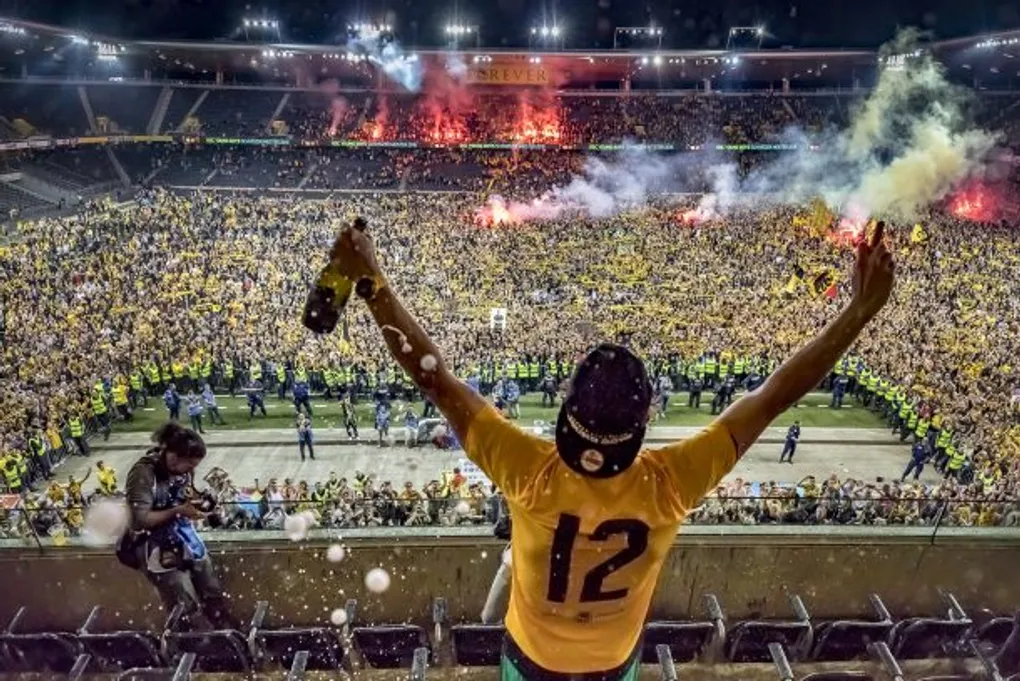
When I got up at 3 a.m. and 5 a.m. to watch the Swiss games at the World Cup, or when I spend my Sunday traveling across the country to support my local club Young Boys Bern, people often ask me why I’m doing this. With the World Cup ending today, it feels like the right moment to share what makes being a football (a.k.a. soccer) fan so fascinating.
As a founder and engineer, I spend most of my days making rational decisions and optimizing systems and processes.
Yet, I dedicate many weekends throughout the year to a hobby in which I have no control over the outcome but that still significantly affects my mood.
This is my attempt to explain why being a football fan is such a rewarding hobby and such a good counterbalance to my rational day job.
Randomness and underdog success
Randomness and luck play a surprisingly large role in football for two main reasons:
- It is a low-scoring sport. Compared with high-scoring sports such as basketball or tennis, football produces very few goals. One lucky punch can decide the entire game.
- Many goals involve chance. A study of the Premier League found that nearly half of all goals originated in random events.

“Sports,” by xkcd.
This randomness makes football one of the sports in which underdogs have the greatest chance of succeeding and is one reason why football is recognized as the world’s most popular sport. Recent examples from this World Cup include Cape Verde nearly knocking out the current world champion, Germany being eliminated early, and the US reaching the round of 16.
Stadium atmosphere and emotions
I once read that a stadium is the only place where humans can still be animals, and I agree. In a society with more and more rules, places where people can openly show emotion, shout, and sing together (in a friendly way) are rare. In a football stadium, even an introvert like me can do all of that.
In the 1960s, going to a football stadium often meant watching rows of men in suits and hats occasionally cheer. That changed as ultra culture took shape in places such as Italy and Argentina. Supporters began organizing into groups that sang chants, played instruments, created choreographed displays, and used flares and smoke. During the 1970s and 1980s, the culture spread across Europe and South America.
As an example, here is the world-famous atmosphere inside Boca Juniors’ famous La Bombonera stadium in Buenos Aires:
And here is a choreographic display by FC Basel supporters against Fiorentina in 2023:
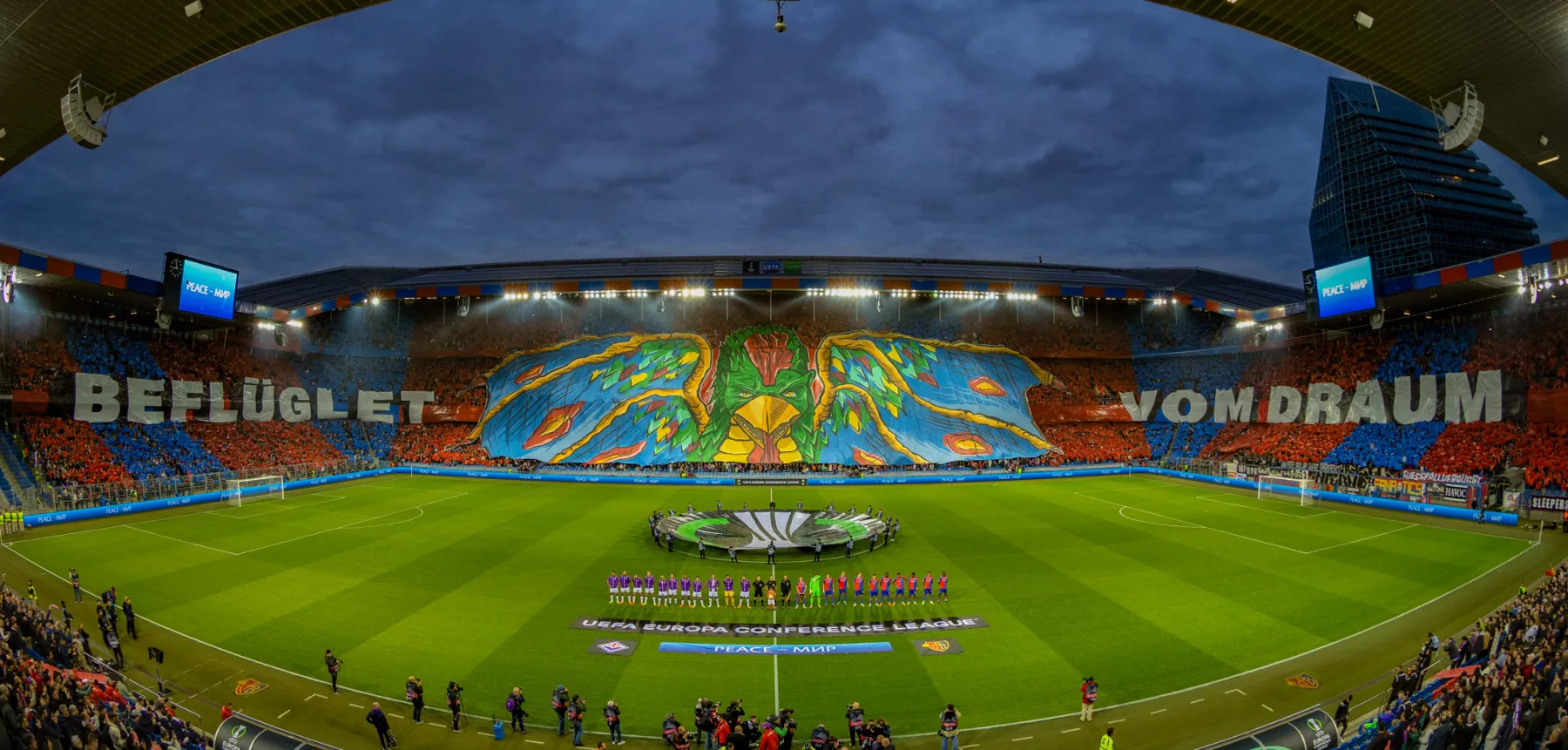
Photo: Muttenzerkurve.
A sense of belonging
Another thing I love about football is that everyone in the stadium is equal. In the home stand of the club I support, you find people of all ages, genders, and professions. I’m standing next to lawyers, doctors, craftspeople, farmers, or people who are unemployed.
Politics does not matter in the stands either. It is another reason so many diverse people come together in a football stadium. Where else does that still happen in a world that is becoming more and more polarized?
For some people, football match is also a release valve for frustrations from work and life. This sometimes has negative side effects that we read about in the media, such as fights or property damage. Compared with the millions of people who watch football every week, these incidents are still very rare though.
For some time now, young people under or around 16 are getting attracted to the fan sections. After Corona, young people were looking for a community, but Switzerland lacks comparable options or large youth centers. These young kids were looking for a sense of belonging, and they found it in the stadium.
Loyalty
Something people outside the football bubble often find hard to understand is that you typically don’t intentionally choose your club, and you certainly do not change it.
Most of my friends and I became fans as kids after going to games with our fathers or brothers. Once hooked, we became supporters for life, and nearly all of us have held season tickets for 20 years now.
In a fast-paced world, there is something beautiful about a supporting a club you and your friends will always stand behind.
It also keeps friendships alive. I see most of my friends regularly at games, and because the dates are known well in advance, even those with families or living in other parts of the country can usually arrange to come.
Away games
Away games have a fascination of their own. A few times a year, my male friends and I travel to away games, and sometimes internationally for Champions League or Europa League games.
I travel often as a tourist and for business, but football trips are a special third category. I get to see cities I might not otherwise visit and experience them from a different perspective. On the day of the match, away supporters usually gather somewhere in the city center and then walk to the stadium together to support their team from the away section.
It is also much easier to connect with locals because football and the upcoming match are natural conversation starters in almost any city.
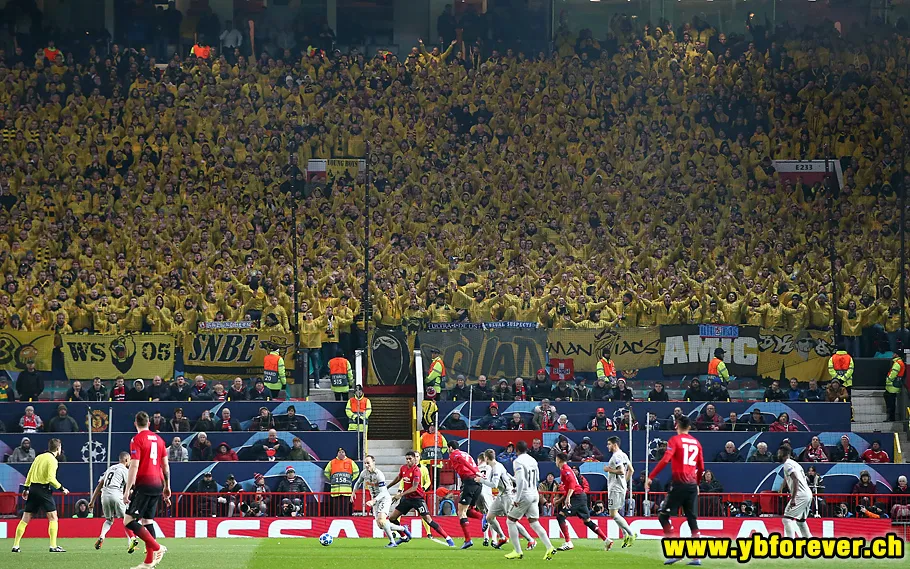
The Young Boys away section at Old Trafford in Manchester. Photo: YB Forever.
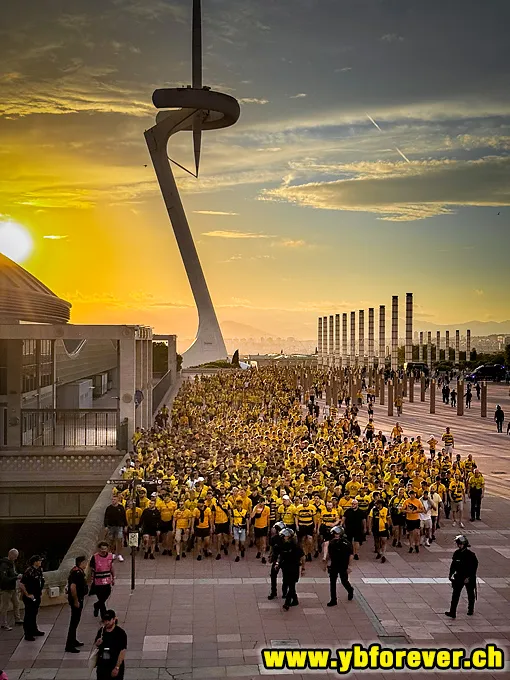
The Young Boys fan walk in Barcelona. Photo: YB Forever.

So if this World Cup gave you a taste of the football fascination, give it a try and go to the stadium! Because football beautifully combines randomness, emotions, and friendships like no other hobby can. It’s irrationally rational.